The full record of all burials in the Church of St. Thomas, Penkhull from October 1844 to the last in 1943
This is in spreadsheet format on Excel so seasy to search names. A great help for people working on their family tree

£4.00
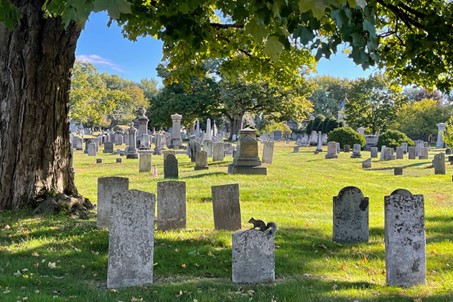
A full record of all burials in the churchyard of St. Thomas, Penkhull from 1843 to 1943
A great help for people researching their family tree
Elzel format on a spreadsheet
The full record of all burials in the Church of St. Thomas, Penkhull from October 1844 to the last in 1943
This is in spreadsheet format on Excel so seasy to search names. A great help for people working on their family tree
The 1840s witnessed a huge growth in Anglican church building within industrial towns, Stoke being just one of them in an attempt to increase the number attending Church of England rather than the Methodist Church whose growth continued undiminished. As a result in districts of Penkhull and Trentvale more people moved into the area and raised the necessary funds two churches before their consecration in October 1842.
For Hartshill, Herbert Minton had already undertaken at its own expense the building of Holy Trinity. At Penkhull, it had been proposed to erect a church by subscription which the Rev Thomas Webb Minton, the son of Thomas Minton the potter consented to endow the church with £1,000 (later to become £2,000) the interest of which would help to pay for a permanent priest and so another step would be made towards the completion of the building. Both were consecrated in October 1842 and still remain an active witness to the worship of God.
Two pages packed with information
An Act to authorize a Sale to the respective Land Owners of all Tithes and Rectorial Dues belonging to the Rectory of
Stoke-upon-Trent in the County of Stafford; for endowing Two new Churches; and for other Purposes. [21st June 1827.]
An incredable document of thirty opages which includes a large amount of descriptions of Glebe Land belonging to the Rector, which inclome was being designed to help to build a number of new Anglican Churches in its ancient parish. This Act on 1827 in an historians dream come true.
Within the traditions of the Anglican Church attention was made to the provision of small churches, frequently built of corrugated tin and run by local Lay Readers especially for the poorer areas of a parish.
In the case of All Saints Mission it was a brick building, a large chapel with raised platform and a room for meetings etc at the side. It was opened in a former joiner’s workshop in 1894 and run by Church Army Captains until the First World War when all Church Army Captains went to serve their country leaving no one in charge so it closed the following year. It remained closed until 1919 when Mr Arnold A. Wain, a licensed preacher was asked to re-open the Mission and take charge.
The building was by then dilapidated with no congregation, so Mr. Wain walked with streets and back-allies of Boothen even standing on a wooden box preaching the gospel to hopefully encourage his future congregation. Following Mr. Wain the duty was taken over by Mr. Sam Calligan of Foden Street until it finally closed in October 1967. During his tenure the building went through a period of change, such as electric lighting, new floors, platform and heating even started a youth club in the adjacent room in 1949 continuing until 1958.
The Mission was always well attended where people found common support in difficult times of unemployment, illness, and poor inadequate housing. In those days Churches and Mission had large Sunday Schools, and the familiar site of the Annual Anniversary walks around that part of Stoke brought with it a welcomed admiration of the work of the Mission. Mr. Wain was always invited to preach on Anniversary Sundays. In his time, he was known as one of N. Staffs outstanding orators and preached with authority and conviction.
This is a good story of social interest of the period and shows that despite many poor areas of Stoke had a ministry adapted to their needs.
Two pages
The baptism register for St Peter ad Vincula – Stoke Church
in Excel format 1813 – 1835
St Thomas Church, Penkhull
Marriage Register 1845 -1891 Excel format spreadsheet
The church of St. Peter-ad-Vincula the church of Stoke-upon-Trent
1703- 1752 marriage register set in Excel
Select at least 2 products
to compare


Reviews
There are no reviews yet.