The full record of all burials in the Church of St. Thomas, Penkhull from October 1844 to the last in 1943
This is in spreadsheet format on Excel so seasy to search names. A great help for people working on their family tree

£4.00
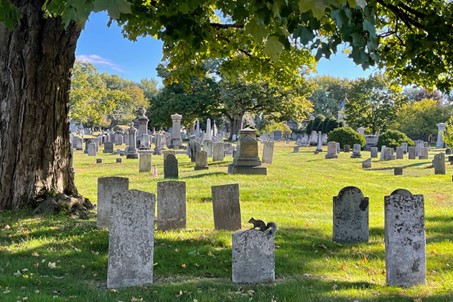
A full record of all burials in the churchyard of St. Thomas, Penkhull from 1843 to 1943
A great help for people researching their family tree
Elzel format on a spreadsheet
The full record of all burials in the Church of St. Thomas, Penkhull from October 1844 to the last in 1943
This is in spreadsheet format on Excel so seasy to search names. A great help for people working on their family tree
St Thomas Church, Penkhull
Marriage Register 1845 -1891 Excel format spreadsheet
Within the traditions of the Anglican Church attention was made to the provision of small churches, frequently built of corrugated tin and run by local Lay Readers especially for the poorer areas of a parish.
In the case of All Saints Mission it was a brick building, a large chapel with raised platform and a room for meetings etc at the side. It was opened in a former joiner’s workshop in 1894 and run by Church Army Captains until the First World War when all Church Army Captains went to serve their country leaving no one in charge so it closed the following year. It remained closed until 1919 when Mr Arnold A. Wain, a licensed preacher was asked to re-open the Mission and take charge.
The building was by then dilapidated with no congregation, so Mr. Wain walked with streets and back-allies of Boothen even standing on a wooden box preaching the gospel to hopefully encourage his future congregation. Following Mr. Wain the duty was taken over by Mr. Sam Calligan of Foden Street until it finally closed in October 1967. During his tenure the building went through a period of change, such as electric lighting, new floors, platform and heating even started a youth club in the adjacent room in 1949 continuing until 1958.
The Mission was always well attended where people found common support in difficult times of unemployment, illness, and poor inadequate housing. In those days Churches and Mission had large Sunday Schools, and the familiar site of the Annual Anniversary walks around that part of Stoke brought with it a welcomed admiration of the work of the Mission. Mr. Wain was always invited to preach on Anniversary Sundays. In his time, he was known as one of N. Staffs outstanding orators and preached with authority and conviction.
This is a good story of social interest of the period and shows that despite many poor areas of Stoke had a ministry adapted to their needs.
Two pages
The church of St. Peter-ad-Vincula the church of Stoke-upon-Trent
1703- 1752 marriage register set in Excel
If you are interested in the background of religions in particular the Anglican and Methodists and their origins this 5,000 ples words is a good start in understanding the growth of two quite opposing religions of the time. The early nineteenth century, an age of mechanism, seemed to muster that unimproved concern at the death of the spirit that was the parent of romanticism. The Anglican Church, conscious of decline, made stringent efforts to reverse the situation by the provision of new churches. The urban working classes, largely alienated, became increasingly apathetic to churchgoing. In many cases people who had been uprooted from their country parishes, by coming into new urban centres in search of employment, became indifferent to religion. Social mobility and demographical increase often left them outside the scope of the established church, a situation made worse by the emergence of the dissenting sects.
After the war with France and the defeat of Napoleon in 1815, the British people of all classes expected a period of prosperity. Times were hard however as there was no improvement in conditions of employment for the next seven years. K.S. Inglis attempts to put churchgoing into perspective. During the nineteenth century, the habit of attending religious worship was not normal among the working classes. From the beginning of the century, the spiritual destitution of the lower orders was a commonplace of discussion.
This is a brief outline of the essay but sets the picture of what follows. A great read for all keen to learn of the issues seperating two churches in the village of Penkhull.
Ten pages with 5,000 plus word content.
Shortly after Stoke was conveyed with the title of City in 1925, there was a move to create a Potteries Cathedral. It was Rector Crick of St. Peters in Stoke (1924) who expired such enthusiasm for a new parish church in Stoke, to become the Cathedral of the Potteries. It was his wish to lay the foundation stone on October 6th 1930, the centenary of the present parish church dedicated in 1830. The pictures here of the proposed new cathedral were published in the Sentinel in March 1928. Rector Crick was convinced that if our city could catch a vision of the possi¬bilities of our great church, the dream could be realised.
The plans for the cathedral were prepared by Sir Giles Gilbert Scott, R.A. The estimated cost was £150,000 (less than the cost of two old, terraced houses in Penkhull today) £50,000 was needed in five years. The Free Churches of the Potteries also offered their support in the campaign.
However, the war followed on following the depression which finally ended any hope of a Potteries Cathedral. The 1834 parish church of Gothic architecture still stands but sadly creates a huge financial burden to every subsequent generation that comes along.
Two pages with pictures of the original design by Sir Giles
I must have spent hours in researching this material of all those who are listed on the church WW 1 memorial, plus others from Penkhull for whatever reason were not listed.
The list of seventeen pages long is compiled in alphabetical order and under each name is given the age, under which body ther served under with full military details of their record and well as family details where possable and home address.
For those searching family histories this is a welcome addition to assist in your research.
Select at least 2 products
to compare


Reviews
There are no reviews yet.