The full record of all burials in the Church of St. Thomas, Penkhull from October 1844 to the last in 1943
This is in spreadsheet format on Excel so seasy to search names. A great help for people working on their family tree

£4.00
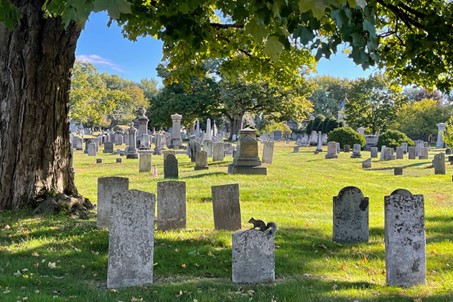
A full record of all burials in the churchyard of St. Thomas, Penkhull from 1843 to 1943
A great help for people researching their family tree
Elzel format on a spreadsheet
The full record of all burials in the Church of St. Thomas, Penkhull from October 1844 to the last in 1943
This is in spreadsheet format on Excel so seasy to search names. A great help for people working on their family tree
The history of St. Peter’s Church, Stoke-upon-Trent dates from at least the sixth century as a Saxon Cross still stand high in the churchyard. In fact, it was the wealthiest parish in the UK in 1296 because of all the glebe land it owned. Not only was there a Saxon church but also a Norman Church, the arches of which were rebuilt in the late 19th century exactly on the spot of the original Norman Church.
By the late 17th century, the population of the pottery towns started to expand with workers coming in from the countryside. Slowly it became impossible for the church at Stoke to serve such a large parish. As a consequence, the church was divided into a number of separate Rectories with Glebe to support the Rector of the new parishes.
By the early 19th century, the old church in Stoke became totally inadequate to accommodate the demand, and the decision was taken to erect a new church on glebe land to the north of the existing churchyard. It was dedicated in 1834 with a capacity to seat over 2,000 worshippers.
This essay continues to expand on the churches origins near to the Trent and Fowlhey Brook and covers subject like the Rectory water Mills on the Trent, the list of rectors from the 12th century although the church was listed at the time of Domesday in 1086. A number of rectors were appointed by the Crown for services rendered, in fact, one never set foot in England but was in receipt of the church tithes. Interesting facts are also discussed from the church registers and the In Memory of tiles that surround the church interior walls which make fascinating reading.
Thirteen pages packed full of information and photos
This is the full list of baptisms listed in the registers now held at Stafford archives from 1842 – 1962 of St Thomas Church, Penkhull.
A great help for anyone researchibng their family tree of Penkhull.
The baptism register for St Peter ad Vincula – Stoke Church
in Excel format 1813 – 1835
This is in the form of a Spredsheet set in Excel listing the Baptism registers for Penkhull Primative Church from 1878 – 1937.
Great help for those researching their family tree.
A pie chart and list of three different denominations withinStoke-upon-Trent as recorded in the religious census of 1851
Within the traditions of the Anglican Church attention was made to the provision of small churches, frequently built of corrugated tin and run by local Lay Readers especially for the poorer areas of a parish.
In the case of All Saints Mission it was a brick building, a large chapel with raised platform and a room for meetings etc at the side. It was opened in a former joiner’s workshop in 1894 and run by Church Army Captains until the First World War when all Church Army Captains went to serve their country leaving no one in charge so it closed the following year. It remained closed until 1919 when Mr Arnold A. Wain, a licensed preacher was asked to re-open the Mission and take charge.
The building was by then dilapidated with no congregation, so Mr. Wain walked with streets and back-allies of Boothen even standing on a wooden box preaching the gospel to hopefully encourage his future congregation. Following Mr. Wain the duty was taken over by Mr. Sam Calligan of Foden Street until it finally closed in October 1967. During his tenure the building went through a period of change, such as electric lighting, new floors, platform and heating even started a youth club in the adjacent room in 1949 continuing until 1958.
The Mission was always well attended where people found common support in difficult times of unemployment, illness, and poor inadequate housing. In those days Churches and Mission had large Sunday Schools, and the familiar site of the Annual Anniversary walks around that part of Stoke brought with it a welcomed admiration of the work of the Mission. Mr. Wain was always invited to preach on Anniversary Sundays. In his time, he was known as one of N. Staffs outstanding orators and preached with authority and conviction.
This is a good story of social interest of the period and shows that despite many poor areas of Stoke had a ministry adapted to their needs.
Two pages
Select at least 2 products
to compare


Reviews
There are no reviews yet.