The full record of all burials in the Church of St. Thomas, Penkhull from October 1844 to the last in 1943
This is in spreadsheet format on Excel so seasy to search names. A great help for people working on their family tree

£4.00
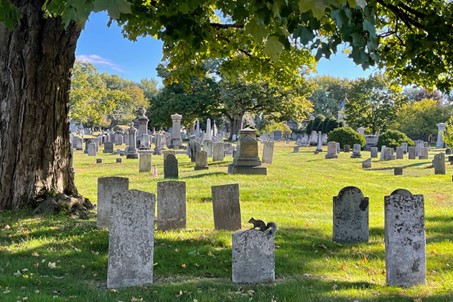
A full record of all burials in the churchyard of St. Thomas, Penkhull from 1843 to 1943
A great help for people researching their family tree
Elzel format on a spreadsheet
The full record of all burials in the Church of St. Thomas, Penkhull from October 1844 to the last in 1943
This is in spreadsheet format on Excel so seasy to search names. A great help for people working on their family tree
The burial register of St Peter ad Vincula Stoke from 1703 – 1752
Set in Excel format spreadsheet
St Thomas Church, Penkhull
Marriage Register 1845 -1891 Excel format spreadsheet
This fact points to the situation of Church as being a site for early Pagan worship and chosen clearly for its direct location adjacent to a ford across the River Trent. It is from this period that this short account commences which include notes re the first Saxon Church, its dates, history, description followed by the Norman Church which hand in 1876 the two Norman arches re-erected from their remains were found in the water flow to the Rectory Mills.
It continues to describe the churchyard and its history of important graves, the ancient parish registers and Stoke Hall the first rectory with a moat around it and loads more. Nine Pages A4 with lots of photographs.
This is in the form of a Spredsheet set in Excel listing the Baptism registers for Penkhull Primative Church from 1878 – 1937.
Great help for those researching their family tree.
Shortly after Stoke was conveyed with the title of City in 1925, there was a move to create a Potteries Cathedral. It was Rector Crick of St. Peters in Stoke (1924) who expired such enthusiasm for a new parish church in Stoke, to become the Cathedral of the Potteries. It was his wish to lay the foundation stone on October 6th 1930, the centenary of the present parish church dedicated in 1830. The pictures here of the proposed new cathedral were published in the Sentinel in March 1928. Rector Crick was convinced that if our city could catch a vision of the possi¬bilities of our great church, the dream could be realised.
The plans for the cathedral were prepared by Sir Giles Gilbert Scott, R.A. The estimated cost was £150,000 (less than the cost of two old, terraced houses in Penkhull today) £50,000 was needed in five years. The Free Churches of the Potteries also offered their support in the campaign.
However, the war followed on following the depression which finally ended any hope of a Potteries Cathedral. The 1834 parish church of Gothic architecture still stands but sadly creates a huge financial burden to every subsequent generation that comes along.
Two pages with pictures of the original design by Sir Giles
The history of St. Peter’s Church, Stoke-upon-Trent dates from at least the sixth century as a Saxon Cross still stand high in the churchyard. In fact, it was the wealthiest parish in the UK in 1296 because of all the glebe land it owned. Not only was there a Saxon church but also a Norman Church, the arches of which were rebuilt in the late 19th century exactly on the spot of the original Norman Church.
By the late 17th century, the population of the pottery towns started to expand with workers coming in from the countryside. Slowly it became impossible for the church at Stoke to serve such a large parish. As a consequence, the church was divided into a number of separate Rectories with Glebe to support the Rector of the new parishes.
By the early 19th century, the old church in Stoke became totally inadequate to accommodate the demand, and the decision was taken to erect a new church on glebe land to the north of the existing churchyard. It was dedicated in 1834 with a capacity to seat over 2,000 worshippers.
This essay continues to expand on the churches origins near to the Trent and Fowlhey Brook and covers subject like the Rectory water Mills on the Trent, the list of rectors from the 12th century although the church was listed at the time of Domesday in 1086. A number of rectors were appointed by the Crown for services rendered, in fact, one never set foot in England but was in receipt of the church tithes. Interesting facts are also discussed from the church registers and the In Memory of tiles that surround the church interior walls which make fascinating reading.
Thirteen pages packed full of information and photos
Select at least 2 products
to compare


Reviews
There are no reviews yet.