
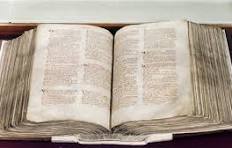
This commences includes as an introduction dom1 above then extends in clearly explaining the original terms used in Domesday. The first impression of Penkhull as an extensive farming community embracing arable, meadow and woodland well supplied with farm machinery. The implications of the organised presentation of the entry, suggests a community, which had been established for some time. At its highest point, Penkhull village, no farming was possible because of the visible outcrop of red sandstone. It is this area that would have been chosen for early huts and a community settlement. The western and northern slopes provided ample opportunity for good farming. These later became the principal sites of the mediaeval ‘open field’ farming community.
The exact measurement of a ‘hide’ (the basis upon which tax assessments were made) varied depending on the state of cultivation. It was the amount of land that could be ploughed in a day using one plough with an eight oxen team. The measurement differed from around sixty acres to around one hundred and eighty acres according to the degree in which the terrain restricted farming techniques. An average of one hundred and twenty acres is generally accepted as an approximate measurement equal to one hide.
Where the Danes settled in England, the word ‘carucate’ replaced that of ‘hide’. Domesday records for Penkhull eleven carucates indicating a manor of approximately one thousand three hundred acres; in addition, there are a further two acres of meadow. Thus, from a simple calculation, the size of Penkhull in 1086 may be assumed to reach far beyond the boundaries of the village of today. 7 pages

Reviews
There are no reviews yet.