
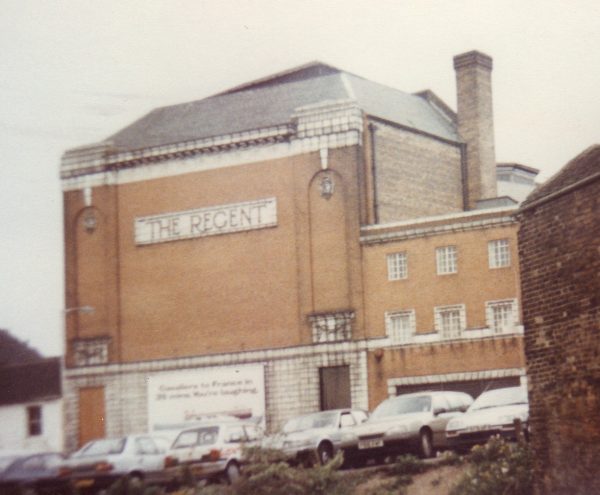


Since the advent of the battery-operated electric drills and considered a boon to both trades and DIY groups, but they are the also provide an asset to potential burglars as I found out which could have easily ended with the Regent being burnt down. It was quite a few years ago when I was campaigning to save the former Gaumont/Odeon cinema in Hanley from demolition to be replaced by a shopping arcade stretching from Piccadilly to Pall Mall. I used to visit the old closed up cinema several times a week to see if all was OK and no one had destroyed the interior. With luck, I came across three potential catastrophic incidents that could have lost this beautiful Grade II* theatre for ever.
On each visit when I entered the auditorium, I always switched on the four 2kw cleaners flood lights mounted In the ceiling, shining its high-powered light through a cut out. On one such occasion after switching on the lights I noticed that two were just re glowing and something was seriously wrong! I climbed the never-ending back stairs in double time, across the roof to gain access into the roof void and walked on planks to the offending lights. The lights had been lifted and placed directly onto the wooden supports. In fact, the whole void was constructed of timber and the huge dome of papier-mâché – once ignited it would go up like a tinder box. It was only a matter of probably a few minutes before the whole lot would have set fire. Two pages x A4
por 20 – The poor conditions for vagrants
£2.00Under the Poor Law of 1834 there were no benefits it was simply if you had no money, no home, no job you would apply to be admitted into a workhouse. The objective was to enforce the worst conditions they could in the hope that those desperate would do anything to remain out of the workhouse. Here families were separated by gender and a minimum age necessary for the maintenance of ‘decency’ whereby children were segregated from adults in order to dissuade them from a life of indolence and mendicancy and kept from what was considered ‘sluggish sensual indolence’.
Vagrants or casuals were travellers from town to town, perhaps we could call tramps. The 1834 Act was designed to stem the drain of resources as a deterrent, but vagrants dominated the flow of poor inmates. In 1837 workhouses became obliged to provide temporary overnight shelter for any destitute person, forcing guardians to arrange special accommodation for this category. Initially, vagrants were housed in infectious wards, stables and outhouses anywhere until purpose built vagrant wards were built at the edge of the main workhouse site, frequently having its own access from the highway to avoid contamination with other inmates.
Vagrants would arrive late in the afternoon waiting for admission and their personal belongings removed. The number of beds available for vagrants was frequently limited and late-comers found themselves turned away. In better-regulated wards, they were stripped, bathed and their clothes disinfected, and a bread and water supper were served.
This was the way in which people were treated if they became a burden upon the parish and in turn taxed the local residents based upon the value of their home. Many think the of survival today with increasing costs everywhere, but in reality, nearly two hundred years ago life then was beyond imagination. Read more about times then for those who had nothing except the clothes they stood up in. Yes, the poor law did make some difference to those who came knocking but inside you were treated less than human.



Reviews
There are no reviews yet.