
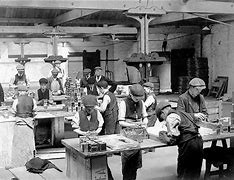


For the young inmates in workhouses the guardians in many cases understood the need to train both genders in an occupation that could find them employment once leaving the workhouse at the age of sixteen. Why, because this was considered a means whereby once discharged, they could find work, and as a consequence not to become a permanent burden upon poor law. This section is a comprehensive study which includes many aspects of young people’s expectations. Girls were treated very differently than boys where the focus was upon domestic duties, washing, ironing and household accounts. Miss Rose Wedgwood provided training and accommodation for a number of girls to be trained in high quality servants work with the promise of employment in a gentleman’s residence. The North Staffs Ladies Association sent up a school at Shelton for the training of young girls.
Boys were trained in gardening and farming, shoe making, tailoring, learning to play a brass band instrument and drill ready for a good position in the services. All this was done by outside skilled people who were paid by the hour.
This original research is a compilation of hope for so many and in return once the young left did not become a burden on the poor law. This is a major piece of valuable study and a certain tool for those studying social and economic studies as well as those who are keen to explore what was done in the workhouse and to learn that all was not bad. A great reflection upon how children inmates were treated at the time, very differently that the adults.
Nine x A4 pages


Reviews
There are no reviews yet.