
£2.00

por 11 The experience of working children.

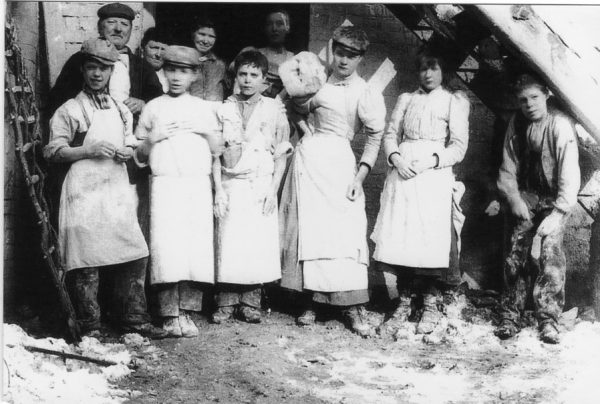
This project is a focus of the life of children in the middle of the 1800’s. It is a focus is the life of the young, how they were treated in the workhouse and within the working environment. It’s not an easy read as it quotes extensively the experiences of life by many children from as early as 6/7 as they had to go out to work in support of their family. Illustrated with photographs of the time and a worthy read to place life at that time into context and how children were treated in so many ways. Breadwinners, because of the system of wages being paid in the street corner pub, were encouraged by the landlord to have more to drink as he claimed he had not enough change to pay them from a £5 note from the foreman who held the pay for all under him. Many wives, along with their children, would stand outside imploring their husbands to come out before all their wages were spent. But would often return home with a drunken spouse in the certain knowledge they would be evicted the following week as there was no money for the rent or food. For many families the breadwinner would just walk out, leaving his wife and children to the mercies of the Poor Law system, or to survive on just a few pence from the relieving officer. For others, because of industrial disease, many mothers were left widowed at an early age. Against this background of need and lack of sustenance, there was also a lack of education except that offered by Sunday schools.

Breadwinners, because of the system of wages being paid in the street corner pub, were encouraged by the landlord to have more to drink as he claimed he had not enough change to pay them from a £5 note from the foreman who held the pay for all under him. Many wives, along with their children, would stand outside imploring their husbands to come out before all their wages were spent. But would often return home with a drunken spouse in the certain knowledge they would be evicted the following week as there was no money for the rent or food. For many families the breadwinner would just walk out, leaving his wife and children to the mercies of the Poor Law system, or to survive on just a few pence from the relieving officer. For others, because of industrial disease, many mothers were left widowed at an early age. Against this background of need and lack of sustenance, there was also a lack of education except that offered by Sunday schools.

3 x A4 pages

Compare

Meet The Author

This project is a focus of the life of children in the middle of the 1800’s. It is a focus is the life of the young, how they were treated in the workhouse and within the working environment. It’s not an easy read as it quotes extensively the experiences of life by many children from as early as 6/7 as they had to go out to work in support of their family. Illustrated with photographs of the time and a worthy read to place life at that time into context and how children were treated in so many ways.Breadwinners, because of the system of wages being paid in the street corner pub, were encouraged by the landlord to have more to drink as he claimed he had not enough change to pay them from a £5 note from the foreman who held the pay for all under him. Many wives, along with their children, would stand outside imploring their husbands to come out before all their wages were spent. But would often return home with a drunken spouse in the certain knowledge they would be evicted the following week as there was no money for the rent or food. For many families the breadwinner would just walk out, leaving his wife and children to the mercies of the Poor Law system, or to survive on just a few pence from the relieving officer. For others, because of industrial disease, many mothers were left widowed at an early age. Against this background of need and lack of sustenance, there was also a lack of education except that offered by Sunday schools.

Breadwinners, because of the system of wages being paid in the street corner pub, were encouraged by the landlord to have more to drink as he claimed he had not enough change to pay them from a £5 note from the foreman who held the pay for all under him. Many wives, along with their children, would stand outside imploring their husbands to come out before all their wages were spent. But would often return home with a drunken spouse in the certain knowledge they would be evicted the following week as there was no money for the rent or food. For many families the breadwinner would just walk out, leaving his wife and children to the mercies of the Poor Law system, or to survive on just a few pence from the relieving officer. For others, because of industrial disease, many mothers were left widowed at an early age. Against this background of need and lack of sustenance, there was also a lack of education except that offered by Sunday schools.

3 x A4 Pages

Reviews

There are no reviews yet.

Be the first to review “por 11 The experience of working children.”

Your email address will not be published. Required fields are marked *

Select at least 2 products
to compare