
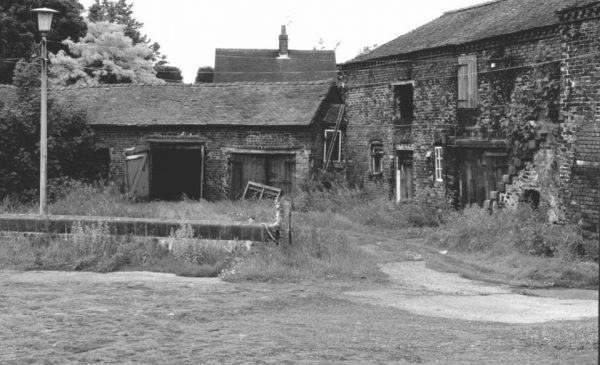


Penkhull Farm was the largest of five farms that covered the area of Penkhull. This farm which has formed the basis of a major study of its life from the time of Domesday 1086 all of which is included in a ninety-minute video of its history from Domesday to the 1960s, but also and importantly of the last farmer in Penkhull, Doug Jarvis and his wife Betty.
The farm situated in Garden Street, formally Farm Lane and previous to that Tittensor’s Lane and was listed as one of the ancient messuages in 1714 manorial survey. It went then by the name of Drarwell and was occupied by the Dale family. The Hearth Tax returns of 1665 refer to a Roger Dale, having property with five hearths. Roger died the same year, leaving the farm to his son, Thomas, a bachelor, aged thirty-two. He later married Margeria Townsend, daughter of a wealthy local farming family, in 1672 which was not uncommon at the time. The parish listings of 1701 confirm a Thomas Dale, yeoman, as living in Penkhull aged sixty-nine. In the list of 1714, his son, also named Thomas, occupied the farm but died four years later in 1719, aged forty-five. His estate was left to his sisters, Elizabeth, and Maria. Between the years 1720 and 1781, both the farm and considerable copyhold land attached passed to the Alsager family of Alsager Hall, near to Congleton.
Almost every possible bit of historical information has been researched to provide a twelve-page essay of over seven-thousand words. To achieve this, the information from Manorial Surveys, extensive Manor Court Rolls covering many centuries have been utilised to the full, tithe schedule, reeve books, census returns, parish registers and other documents far too many to list here, a massive undertaking.
However, the important thing is it also presents the life story of Doug and his wife Betty who from the 1920’s lived at the farm. It is an intimate story examining the main features of their lives in Penkhull from delivering milk on a cart and house direct from the churn into a container left on the doorstep. It covers times when Doug’s mother would pluck chickens and churn milk direct from the cow and Doug doing fire-watch during the war whilst on the other hand doing a bit on the black market.
This section is a complete package of the life of two people, who not only gave their lives to the keeping of cows and farming, but also became an integral part of life in Penkhull, which to many of the young it became an outlet of energy during the six weeks school holidays, helping with reaping the harvest for the winter months and general farm duties while the younger children would take pride of place among the milk churns whilst riding on his milk cart pulled by the farm horse.
So, this story has a lot to offer for those keen to learn more about farm life, the social impact that the children explored and the economic challenges of a changing farm life.

Reviews
There are no reviews yet.