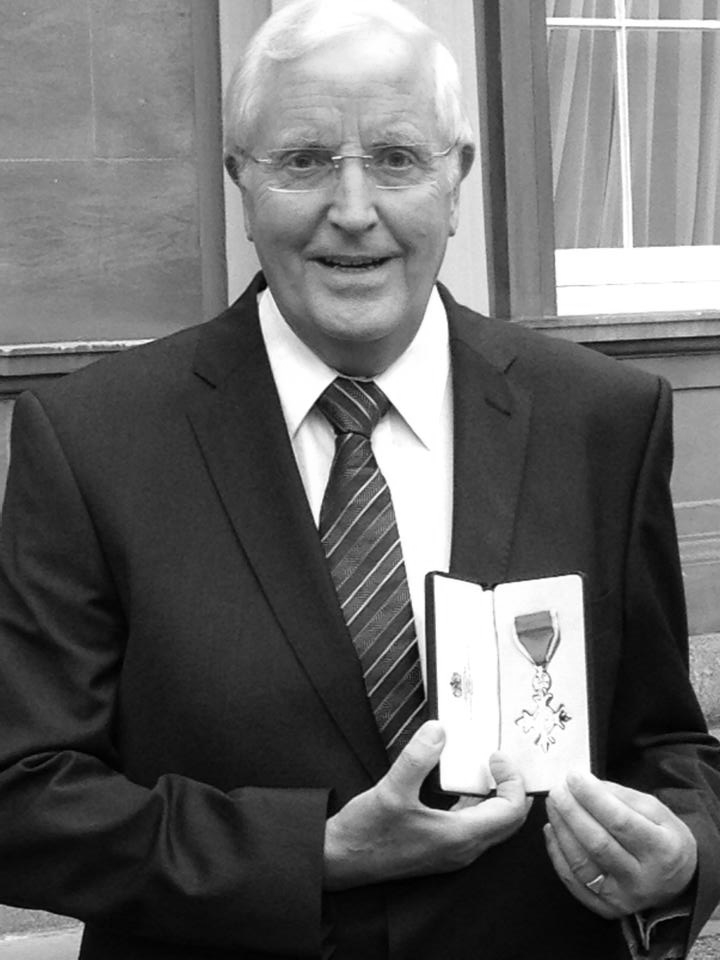
Richard Talbot

The profile of Richard Talbot reflects life of being a child following the end of the Second World War a period of difficulties and a ‘make do and mend’ philosophy.’ It identifies the ingenuity of young children with little or no pocket money. It also illustrates how as a young child Richard, along with his two brothers had to help with many household chores including fetching coke from the gas works on a Saturday with just an old pushchair to carry it back home with. All this with no TV, only an old radio, just a coal fire so no central heating, toilet down the yard which until the age of around nine was a Duckett lavatory until water was piped down the yard to provide a flush toilet.

Author's books

rel 2 All Saints Mission Church – Boothen.

£2.00

Within the traditions of the Anglican Church attention was made to the provision of small churches, frequently built of corrugated tin and run by local Lay Readers especially for the poorer areas of a parish.
In the case of All Saints Mission it was a brick building, a large chapel with raised platform and a room for meetings etc at the side. It was opened in a former joiner’s workshop in 1894 and run by Church Army Captains until the First World War when all Church Army Captains went to serve their country leaving no one in charge so it closed the following year. It remained closed until 1919 when Mr Arnold A. Wain, a licensed preacher was asked to re-open the Mission and take charge.
The building was by then dilapidated with no congregation, so Mr. Wain walked with streets and back-allies of Boothen even standing on a wooden box preaching the gospel to hopefully encourage his future congregation. Following Mr. Wain the duty was taken over by Mr. Sam Calligan of Foden Street until it finally closed in October 1967. During his tenure the building went through a period of change, such as electric lighting, new floors, platform and heating even started a youth club in the adjacent room in 1949 continuing until 1958.
The Mission was always well attended where people found common support in difficult times of unemployment, illness, and poor inadequate housing. In those days Churches and Mission had large Sunday Schools, and the familiar site of the Annual Anniversary walks around that part of Stoke brought with it a welcomed admiration of the work of the Mission. Mr. Wain was always invited to preach on Anniversary Sundays. In his time, he was known as one of N. Staffs outstanding orators and preached with authority and conviction.
This is a good story of social interest of the period and shows that despite many poor areas of Stoke had a ministry adapted to their needs.
Two pages


rel 3 Church or Chapel – how two denominations developed together in Penkhull.

£6.00

It was in 1832, when the first move was made to provide an Anglican Church in Penkhull, a village ion the top of a hill. The parish church of St Peter-ad-Vincula was situated around one mile away in the valley below. It was used weekdays as a school and Sundays for worship and situated in what is now the north side of the present churchyard. In 1842 the present church of St. Thomas was built to accommodate and expanding congregation.
Probably as a direct result and with the predominant number of working people in the village, the first Primitive Chapel was erected within a stone’s throw from the one in the churchyard although many were worshiping in houses by that time. The new chapel was opened in 1836 (still standing) but there were serious financial issues almost from day one to finance the building.
Following the establishment of the church in 1842, by 1844 the church established a National School just across the road. Then in the 1850’s because of the high number of children wishing to attend the Primitive church, an additional separate but attached Sunday School was built.
The story continues to include the parish registers and many different views between the two denominations which went on for years. This twenty-seven-page essay places both church/chapel within the national framework and far much more. This is an important essay for students of religious worship and community relationships of the time.
twenty-seven pages with photos

rel 4 Hopes of Stoke becoming a Cathedral City in 1930s.

£2.00

Shortly after Stoke was conveyed with the title of City in 1925, there was a move to create a Potteries Cathedral. It was Rector Crick of St. Peters in Stoke (1924) who expired such enthusiasm for a new parish church in Stoke, to become the Cathedral of the Potteries. It was his wish to lay the foundation stone on October 6th 1930, the centenary of the present parish church dedicated in 1830. The pictures here of the proposed new cathedral were published in the Sentinel in March 1928. Rector Crick was convinced that if our city could catch a vision of the possi¬bilities of our great church, the dream could be realised.
The plans for the cathedral were prepared by Sir Giles Gilbert Scott, R.A. The estimated cost was £150,000 (less than the cost of two old, terraced houses in Penkhull today) £50,000 was needed in five years. The Free Churches of the Potteries also offered their support in the campaign.

However, the war followed on following the depression which finally ended any hope of a Potteries Cathedral. The 1834 parish church of Gothic architecture still stands but sadly creates a huge financial burden to every subsequent generation that comes along.

Two pages with pictures of the original design by Sir Giles

rel 6 Penkhull Methodist Pantomimes.

£3.00

The first production entitled Snow White, and the Seven Dwarfs was staged in 1958, and was presented almost in a makeshift theatre in the upper schoolroom of the Sunday School. Because of its huge success and public praise, it was decided to present the panto in what was then called Penkhull Senior School the following year. The new venue had a large stage and many schoolrooms that could be used for dressing and props. The next production, Cinderella, surpassed all expectations and the mould was set for an annual pantomime to be presented the week after Christmas. Mrs Buxton continued to produce for three years and was followed in that important role in 1962 by Mrs Betty Powell, by which time the organisation drew in many helpers to build the props, install the lighting, and paint the scenery from both chapel members and the local community. My mother-in-law, Meg Palmer, took charge of the costumes; Dennis Cotterill the lighting and electrics. Other helpers in those early days were Mrs Marjorie Prophett; Mr and Mrs Tom Rowley; Frank Adams; and Jim Powell who helped to produce the props. A story that will bring back so many wonderful memories both of the pantomimes but the people involved.

Three pages with loads of Panto photographs.

spo 1 Penkhull Farm lease to Spode 1831 from the Alsager family

£2.00

All that Messuage farmhouse or tenement situate and being at Penkhull within the said Manor late in the possession of Harvey Boulton deceased. Together with the barns, stables, cowhouses, outbuildings, and other conveniences to the same belonging. This is the introduction to a facinating document that goes on to describe all the lands at that time that belonged to Penkhull Farm. In addition includes all the farm equipment, farm animals, the farm house and whats included.

Infact the lease gives a total insight as to what the farm was all about and its importance to Penkhull in 1831

spo 2 The Kingdom of Josiah Spode ll

£5.00

This thirteen-page essay entitled The Kingdom of Spode – is just that. It starts with a description of Spode’s family tree together with a quality map of 1832 showing the extent of the Mount estate. It follows with a description of many of his properties he built in Penkhull for his workers away from the pollution of Stoke. It starts with the sale of bankrupt Thomas Harrison in 1802 where Spode purchased the site to build his mansion and other Lots and continues with the development of his new home following that of Fenton Hall.
Following his death, it describes the various of tenants of the Mount including Mrs Allbut who opened a Girls Finishing School for children of the wealthy. A great read at thirteen pages and photographs.

war 1 – Greyhound Inn – Dad’s Army amunition store

£2.00

The antics of Penkhull Dads Army used an upstairs room as their gun and ammunition store – where? The Greyhound pub.

It is now fifty years since the BBC started to show the sit-com Dad’s Army which ran from 1968-1977 and yet, it seems since then as though the programme has never been off air. But who would think that the Greyhound Inn and Penkhull Home Guard would have anything in common with the television programme – Home Guard?
Most of us have at some time or another, enjoyed the series, with its light-hearted look at the Second World War’s Home Guard. However, despite this amusing portrayal, in its time, the Home Guard represented a formidable force of willing volunteers ready to give up their lives in protection of their country.
This essay of over 1000 words gathered from the recorded antics of the Penkhull group and cherished as those who were there and no longer alive. This, therefore, is a huge contribution to the social history of wartime in a small village of Penkhull and a worthy contribution to this archive.

war 2 – Newcastle Lane, Penkhull bomb dropped

£3.00

Air Raids hit North Staffordshire for the first time in June 1940
It was midsummers night, 24th June 1940that a sole German bomber, probably heading for Shelton Iron and Steel using the line of Penkhull Church spire and the Infirmary chimney as landmarks, came over the village of Penkhull and dropped four bombs in the vicinity with the death of one person Mr. Harry Beeston in Newcastle Lane.

Penkhull Home Guard was manning as usual the church tower and heard the plane coming distinguished by its sound. Frank Marsden, sergeant on duty that night and records that fearful moment of the realisation that they were about to be hit. I could hear the plane and instinctively knew that it was a German Messerschmitt, we had been trained to listen out for. It came from the south, just over Thistley Hough and then suddenly the whistling sound of the bomb dropping brought fear to all of us high up the tower. Instinctively, we crouched down holding on to our tin helmets fearing the worst and then we heard the explosion nearby. My first thoughts were ‘thank God’,This short introduction to this 1000 word essay is just a fraction of whats to follow and what happened to the other three bombs that droped that night?

war 4 Keep the Home Fires Burning.

£6.00

This is probably the most researched article written within this archive consisting of twenty-six pages, 17,000 words with loads of photographs in support. It is a unique record of the war years of a small village called Penkhull in the Potteries and diligently records all the coming, goings and changes that occurred in the village during the second world war and frequently with the names of people involved at the time.
All the material, meticulously researched some fifty odd years ago by personal recorded interviews of residents, former members of the home guard, local pub licensee and notes taken from a running description of how the war affected the lives of those who lost loved ones as well as all the restrictions on a familiar way of life over six years from a few notes of the time written by the vicar Rev. V G Aston in the parish magazine. It’s an intimate and accurate record of the time when bombs were dropping on the village and the nearby hospital, the antics of the home guard from their lookout from the church tower in the centre of the village.
It records sad times as the first boy from the village who was killed in the war returned and his coffin brought into church in the middle of Evensong, a heart rendering experience repeated so many times, each with the pain of loved ones evident. Occasionally news arrived from soldiers from the village who sent cards home to say that they were OK or had now become prisoners of war. In many cases the news of events was difficult to put into words. The study looks at the almost daily how life changed following the announcement that we were at war which was listened too in a packed church that very morning at 11 a.m.
The effects of food rationing, street lighting, distribution of gas masks and all other restrictions on schools, football matches, and cinema opening and loads more. This short history is true reflection, probably the only major contribution to the history of the war as seen through the eyes of local people and now compiled directly from my original studies held over for eighty years. Now it could be the last ‘VE Day’ event for all to share and so bring to life my studies of yesteryear for all to read and understand just how the effects of war changed life and priorities is now a read for everyone.


1 7 8

Select at least 2 products
to compare