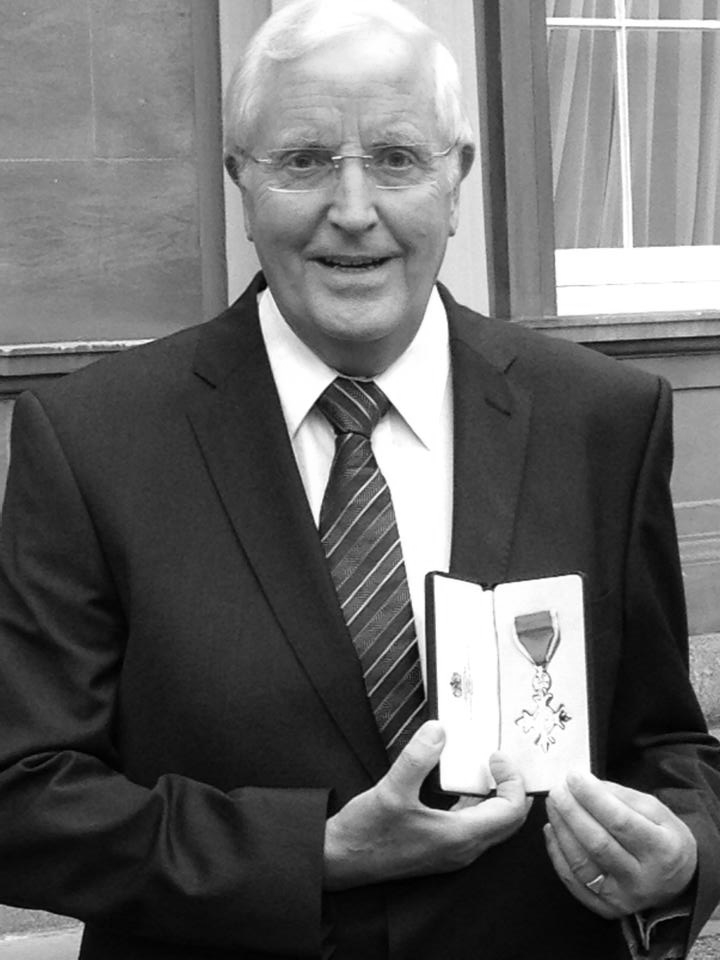
Richard Talbot

The profile of Richard Talbot reflects life of being a child following the end of the Second World War a period of difficulties and a ‘make do and mend’ philosophy.’ It identifies the ingenuity of young children with little or no pocket money. It also illustrates how as a young child Richard, along with his two brothers had to help with many household chores including fetching coke from the gas works on a Saturday with just an old pushchair to carry it back home with. All this with no TV, only an old radio, just a coal fire so no central heating, toilet down the yard which until the age of around nine was a Duckett lavatory until water was piped down the yard to provide a flush toilet.

Author's books

por 5 Education, Care and Wellbeing of Children in the Spittals workhouse.

£10.00

This is a major study of how children were treated in the workhouse and includes all aspects of their daily routine and life. From education, religious worship, discipline, occupational training and the preparation of trades of playing a musical instrument following workhouse life. Again, this is a huge contribution to the social history of the time and based entirely upon factual research.

There are thirty-nine A4 pages and over 18,000 words.

por 8 Spittals Workhouse, Stoke – The burials of paupers.

£3.00

Until 1869 burials for paupers were buried in the churchyard of the parish church, St. Peter ad Vincula in the town of Stoke over one mile away in a patch reserved for the class of pauper. The district churches of Penkhull and Hartshill had not yet being established and the nearest parish church of St. Giles, Newcastle-under-Lyme, was not within the parish of Stoke as a consequence no paupers were buried there from the Spittals Workhouse.

Because of the near capacity of Stoke Churchyard being reached, it was found necessary to create a new burial ground for paupers, leaving what space remaining in Stoke for local people. A cemetery created for the specific use of paupers from the Spittals workhouse was opened in 1869 on land opposite to the entrance of the workhouse on London Road (then a single carriageway) and bounded on the far side by the Newcastle canal. The burial ground was subsequently enlarged in 1900 on additional land purchased from the Duke of Sutherland. There are no records available to indicate the number of burials over a period of fifty years of its use except those held by the General Registrar and these are not available for public examination.

Four x A4 pages 1600 plus words. Great study for students or individuals.

por 9 Spittals Workhouse, Stoke Regulations for new inmates.

£2.00

This work is a totally one off as it covers extracts from 1714 regulations of the Spittals Workhouse, Stoke-upon-Trent relating to the admission, cleansing, disinfecting clothing and searching of inmates for any valuables.

It describes the experiences on admission to the Institution, articles of value found upon the inmate shall were deposited with the Master, any money or value security in his possession will be used to off-set their maintenance within the institution.

It continues to list the items that are prohibited such as Cards or Dice, Letters, articles or written or printed matter of an obscene or improper character. The reference to the bathing of inmates is quite scary. This is an early view of life in 1714 under the Old Poor Law of Elizabeth I and an eye-opener again to the treatment of inmates both male and female.

pre 1 Prehistoric evidence of Penkhull.

£3.00

In 1910 when the first historic find was unearthed in Penkhull whilst excavating for the new Garden Village enterprise in Penkhull – a Neolithic urn, probably for the use of potpourri placed inside a British Barrow. The second is a fine leaf-shaped arrowhead discovered in an area that would have been a forest surrounding the clearing of the village of Penkhull. The third is a stone axe-head. These are described fully along with photographs in this appraisal of our past and the early settlement of Penkhull c5000 years ago.

Three x A4 pages

pre 2 Roman occupation at Trentvale, kiln, fort, and ramparts.

£2.00

Little has been compiled regarding the local evidence of the Roman first century occupation at Trentvale with the exception of the discovery of a roman kiln found there in the 1930s. A replica has pride of place in Hanley museum. However, by chance the ramparts of the fort overlooking the entrance to the North Staffs conurbation at Hanford was discovered around sixty years ago and is detailed also in the article in addition of the discovery in 1912 of a cobbled pavement in the centre of Campbell Place twelve feet below the present surface above which was found twelve inches of silt by Charles Lynam. Mention is also made of a boulder channel discovered in Honeywall in 1909. Interesting research and illustrated.

Two printed pages x A4

pub 21 The Royal Manor of Penkhull by Dr. Richard Talbot.

£24.00

Interested in history? Then this book on the ancient manor and village of Penkhull will be a must for your bookshelf. In contains more than 300,000 words, 496 pictures, maps and diagrams.

This is a book for reading, not a book just of pictures with a few captions. It is a book packed with information about the area commencing from the Ice Age, the Iron Age, the Roman occupation, the Bronze Age, the Middle Ages, the industrial revolution right up to the present-day containing information researched over the last twenty years and two years in the making.

The early invaders into this area have left evidence dating from the middle Neolithic period in the form of a flint arrowhead, bronze-age incense cup and a stone axe head.

It was from a period of nearly 5,000 years ago that the village of Penkhull was created, probable because of its elevated and defensive situation standing above the River Trent and the Lyme Brook. Penkhull was a Royal Manor from the time of William the Conqueror to at least 1308,

The book is Hard Back, A 4 size containing 5,000 years of history, its unique as no other book contains so much original research material.

Cost now reduced to just £24 inc PP (UK) Note: the current price of this 2k book postage exceeds £8 in included in price. Only 69 copies remain. 

pub 22 That’s Entertainment –Newcastle and Pottery Theatre 1788-1957.

£6.00

Dr Richard Talbot, MBE, F.R.Hist.S., is one of Staffordshire’s leading historians having studied history from the age of eighteen, first gaining a Master of Philosophy degree at Keele University, followed by a PhD at Leicester. He is also a Fellow of the Royal Historical Society, well-known broadcaster, documentary producer, lecturer, and regular contributor to the local media.

That’s entertainment is not a history of the building, it’s a complete package of several disciplines’ which will attract local inhabitants, students of theatre history and development, social history of the period and how this addressed itself in theatre attendance. Not only that, but Dr. Talbot also expands his work by using examples within the limits of theatre development at the time.

This study illustrates the challenges of competition and how that was tied into the social fabric of the town, followed by improvements in transport from the mid-1900s. In fact, it is a complete social history combining theatre, localities, social habits, and class distinction which was an integral part of society for most of the theatres existence.

The Newcastle and Pottery theatre was the first purpose-built theatre in North Staffordshire and its interior design based upon the Olympic Theatre in London, and a fine example of provincial theatre architecture of the period.

A5 format 76 pages inc photographs. Good presentation booklet Price £6 inc postage to clear remaining stock.

reg 2 The Singing Fool – the first Talkie shown in the Potteries.

£2.00

The 1920s was a decade known in North America as the “Roaring Twenties” while in Europe the period is sometimes referred to as the “Golden Age” because of the economic boom following World War I, but all this came to an end in October 1929 with the devastating Wall Street Clash.
Provincial Cinematograph Theatres, the country’s largest cinema chain at the time with over one hundred cinemas in the UK had secured the Hanley site as early as 1925. However, with issues with other properties next door it was 1929 before the largest cinema in the Potteries was opened.
Amid all this it was the picture-house which thrived for just a few pence you could leave all the stresses behind as be transformed twice a week to a world of make-believe. This would be created not just by celluloid projected onto a silver screen, but by the sheer splendour of the ‘Picture Palace’ and the new Regent in Hanley was going to be the best in the Potteries The cinema was operating silent movies when it opened. At the same time, a debate was being held between film directors and actors if to proceed with ‘talkies’ because of the costs and wondered if they would oust the silent picture or even rival the appeal of the theatre.
It was not long after that the very first ‘Talkie’ in the Potteries was shown at the Regent in July 1929 when “The Singing Fool” starring Al Jolson took to the screen filling the 2134 seats at four performances a day. At the end of the week the demand was so great with constant queues around the block that the management decided to run the film for a further week. This meant that around 26,000 people came to see history in its making at The Regent and to witness actual words and music coming for the first time from actors. A simply magical story of our lost years. two x A4 pages

reg 4 Gaumont was stopped from burning down.

£2.00

Since the advent of the battery-operated electric drills and considered a boon to both trades and DIY groups, but they are the also provide an asset to potential burglars as I found out which could have easily ended with the Regent being burnt down. It was quite a few years ago when I was campaigning to save the former Gaumont/Odeon cinema in Hanley from demolition to be replaced by a shopping arcade stretching from Piccadilly to Pall Mall. I used to visit the old closed up cinema several times a week to see if all was OK and no one had destroyed the interior. With luck, I came across three potential catastrophic incidents that could have lost this beautiful Grade II* theatre for ever.
On each visit when I entered the auditorium, I always switched on the four 2kw cleaners flood lights mounted In the ceiling, shining its high-powered light through a cut out. On one such occasion after switching on the lights I noticed that two were just re glowing and something was seriously wrong! I climbed the never-ending back stairs in double time, across the roof to gain access into the roof void and walked on planks to the offending lights. The lights had been lifted and placed directly onto the wooden supports. In fact, the whole void was constructed of timber and the huge dome of papier-mâché – once ignited it would go up like a tinder box. It was only a matter of probably a few minutes before the whole lot would have set fire.

Two pages x A4

reg 5 Rock around the Clock – that changed the world. Just two minutes and eleven seconds

£2.00

In April 1954, Bill Haley and the Comets recorded Rock around the Clock and created nothing less than a cultural revolution in the USA and Europe. It was even more remarkable that the words were penned by a sixty-year-old Max C. Friedman – one, two, three a ’clock four a ‘clock rock – that became the biggest selling single in the UK and world-wide selling around forty million copies. Its impact, recalled Tom Jones years later was spontaneous and liberating,
Because of its phenomenal success, Rock around the Clock, released in 1954 was chosen for the film Rock around the Clock of 1956, and was shown at the Gaumont in Hanley and Stoke with phenomenal success, packed houses and dancing is the isles creating mayhem for the management wherever it was shown. This article explores the local reaction at the time which has never been repeated.

Two pages plus photos

reg 6 The Struggle for a Live Theatre in the Potteries Begins

£2.00

The Struggle for a Live Theatre in the Potteries begins by attempting to save the old Gaumont cinema in Hanley against all the odds in a working-class economy. Yet it is from a background of despair and difficulty regarding the future of live theatre in Stoke-on-Trent with the almost daily issues of finance and management at the Theatre Royal that a new assessment had to be made with a fresh vision and a line drawn under the past– that of saving the then closed old Gaumont Cinema in Piccadilly, Hanley, and re-opening it as a refurbished working live touring theatre. It became clear to me and others “that live theatre should be seen in a wider context, encompassing a focus for re-generation and an elevation of the city’s profile to encourage much needed inward investment”. Yet there was a further dimension, it was to do with the appreciation and the involvement in the arts “unless there is a focus of top professional shows presented in a well-equipped, suitable and comfortable environment there would be no future for live theatre in North Staffordshire and little to which our young could aspire”. It is these two fundamental principles that became my driving force to save the Regent and to bring it into use as a live well-equipped theatre.

two pages

reg. 3 1929 Cinema kept traditions of live pantomime alive ….

£2.00

When the Theatre Royall in Hanley finally dropped the safety curtain on live in 1961 shows, it would have caused some considerable disappointment to families with young children as they would all lose out on the annual pantomime. Yet there was hope as the then Gaumont cinema practically across the road was built with full theatre facilities, dressing rooms, fly town, and a huge orchestra pit all standing empty. The thought I ponder over that for practically two generations of children would have only experienced for the twenty odd years last, Jonathan Wilkes playing the leading role at the old cinema, now greatly restored and back to its original name The Regent.
But it was the old cinema that came in and saved the annual Christmas Pantomime for the masses of children and families. With the silver screen raised high into the fly tower, productions once more commenced of the annual potteries pantomime.
Annual pantomimes at the Gaumont commenced the same year as the Theatre Royal closed to live shows.
So, with a re-decoration of dressing rooms and a general clean up, the first pantomime was staged in December 1961 with Robin Hood staring John Hanson known for his fine tenner voice and the character of the Red Shadow in the musical The Desert Song. All 2,334 seats were sold for each performance and the Sentinel report referred to it as a most colourful – well-dressed production and worth seeing if only for the singing, praising John Hanson as being on top form and engaging in fights and duels. Comedian Max Wall played the part of Martha, the children’s nurse was described as a likeable dame who showed himself as a versatile dancer.
This was just the beginning of the pantomime continues success for the potteries. The story contains stories of some of the top stars of the day, frequently playing the Dame.

Two pages x A4 Pictures


rel 1 A brief history of the Parish of Stoke upon Trent.

£6.00

The history of St. Peter’s Church, Stoke-upon-Trent dates from at least the sixth century as a Saxon Cross still stand high in the churchyard. In fact, it was the wealthiest parish in the UK in 1296 because of all the glebe land it owned. Not only was there a Saxon church but also a Norman Church, the arches of which were rebuilt in the late 19th century exactly on the spot of the original Norman Church.
By the late 17th century, the population of the pottery towns started to expand with workers coming in from the countryside. Slowly it became impossible for the church at Stoke to serve such a large parish. As a consequence, the church was divided into a number of separate Rectories with Glebe to support the Rector of the new parishes.
By the early 19th century, the old church in Stoke became totally inadequate to accommodate the demand, and the decision was taken to erect a new church on glebe land to the north of the existing churchyard. It was dedicated in 1834 with a capacity to seat over 2,000 worshippers.
This essay continues to expand on the churches origins near to the Trent and Fowlhey Brook and covers subject like the Rectory water Mills on the Trent, the list of rectors from the 12th century although the church was listed at the time of Domesday in 1086. A number of rectors were appointed by the Crown for services rendered, in fact, one never set foot in England but was in receipt of the church tithes. Interesting facts are also discussed from the church registers and the In Memory of tiles that surround the church interior walls which make fascinating reading.
Thirteen pages packed full of information and photos


rel 10 Rood Screen in Penkhull Church 1st WW Memorial

£2.00

Following the end of the First World War every village, town and city in the land discussed a memorial to those who had given their life in the Great War. Some created civic memorials in front of town halls some were erected in Parks and Churchyards and others took other forms of remembrance. At Penkhull it was agreed that this should be in the form of a Rood Screen.

It waas this national movement to remenber those who died that prompted Penkhull Church to consider which was an appropriate  memorial and worthy of the sacrifice of so many lives and the desire to express thankfulness to Almighty God for allowing Britain to achieve victory.

Plans were drawn of the proposed designed and distributed to every household within the parish. The scheme costing £950 well over £275,000 in today’s money. A Mural Tablet, it was said would be situated near to the Rood listing the names of those who had made the ultimate sacrifice. The plan also included new choir stalls. It was thought that if every household promised to contribute just one guinea that the scheme would become a reality. The project was ‘to the Glory of God, in memory of the brave fallen and as a thank-offering’. As a result volunteers would visit each home to collect their weekly donation of just 3d a week for twenty weeks, such was the poverty in the 1920s.

rel 11 St. Thomas WW 1 list of all those who 1914-1918 war.

£5.00

I must have spent hours in researching this material of all those who are listed on the church WW 1 memorial, plus others from Penkhull for whatever reason were not listed.

The list of seventeen pages long  is compiled in alphabetical order and under each name is given the age, under which body ther served under with full military details of their record and well as family details where possable and home address.

For those searching family histories this is a welcome addition to assist in your research.


rel 17 St. Peter ad Vincula, Stoke Parish Church – A Brief History

£5.00

This fact points to the situation of Church as being a site for early Pagan worship and chosen clearly for its direct location adjacent to a ford across the River Trent. It is from this period that this short account commences which include notes re the first Saxon Church, its dates, history, description followed by the Norman Church which hand in 1876 the two Norman arches re-erected from their remains were found in the water flow to the Rectory Mills.
It continues to describe the churchyard and its history of important graves, the ancient parish registers and Stoke Hall the first rectory with a moat around it and loads more. Nine Pages A4 with lots of photographs.

1 6 7 8

Select at least 2 products
to compare