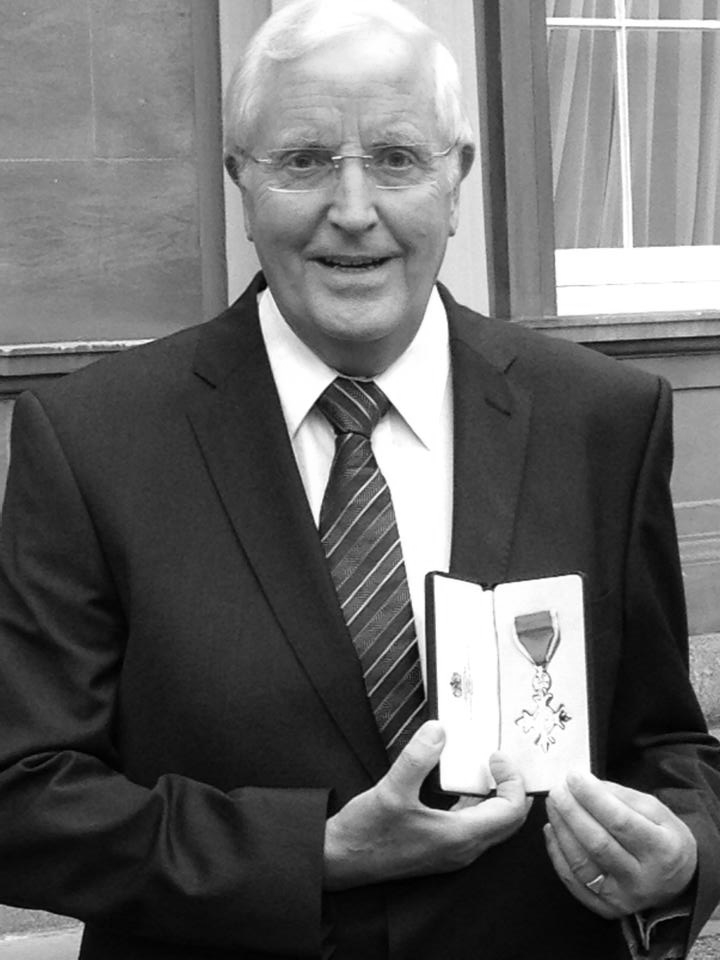
Richard Talbot

The profile of Richard Talbot reflects life of being a child following the end of the Second World War a period of difficulties and a ‘make do and mend’ philosophy.’ It identifies the ingenuity of young children with little or no pocket money. It also illustrates how as a young child Richard, along with his two brothers had to help with many household chores including fetching coke from the gas works on a Saturday with just an old pushchair to carry it back home with. All this with no TV, only an old radio, just a coal fire so no central heating, toilet down the yard which until the age of around nine was a Duckett lavatory until water was piped down the yard to provide a flush toilet.

Author's books

inn 3 The Black Lion, Trent Vale.

£3.00

The route from ancient times to the town of Stoke and the Potteries was via Hanford along what is the A34 to a point where the present Rookery Lane turns off. From there the road continued up Brisley Hill, now called Trent Valley Road, through the village of Penkhull and down Honeywall – an arduous road especially for packhorses taking the products of Stokes’ potworks to the south.

In the late 1780s it was decided to create a turnpike road with toll gates from what is now the Black Lion at Trent Vale to Campbell Place in Stoke and was opened in 1791 creating new opportunities for traders. In all probability to exploit this new development probably the owner of Black Lion Farm which stood on the opposite side of the A34 to Rookery Lane built the Inn, the Black Lion on a prestigious corner of the important London to Carlisle Road, the A34, and the new Turnpike Road, London Road and subsequently erected the Black Lion c1792/3.

As soon as the Inn was established it was a location that identified other nearby properties for adverts for land and houses whereby all included the Black Lion on the Turnpike Road. As the name Trent Vale had not become established, the Black Lion was frequently advertised as near to Newcastle or Hanford or near the town of Stoke and soon became the only inn and social venue of the district.

inn 4 The Greyhound Inn – its history from the 14th century.

£5.00

The present Greyhound Inn, formerly known as Penkhull Hall then previously by the name of Greenhead House, (simply – head of the green) stands opposite to what is now the west door of the parish church, but before the church was built here was a large open space of common manorial waste where the village pinfold was situated. In the first place the Greyhound was an old building, originally a farmhouse, would be constructed of timber, wattle and daub with one large room – the large parlour, which was used for the Customary Court Baron and Court Leet. This section of the building now forms the public bar section of the Inn. The building still retains its original form, although largely reconstructed in 1936.

Beneath the floor was The Penkhull Lock-up often used for the confinement of drunks who were usually released the next day, or to hold people being brought before the local magistrate the following morning. A typical village lock-up is a small structure with a single door and a narrow-slit window or opening. Lock-ups were not a gaol; they were only a temporary place to secure prisoners.

A precise history is told with the aid of court rolls, Hearth Tax Record, surveys of the manor and parish records, all meticulously recorded to provide an accurate unique account of its history from the 14th century.  The essay is 21 pages x A4 with many photographs which will no doubt give great pleasure to the reader, and even more help with late night conversations in the pub debating its history.


inn 5 The Royal Oak – Manor Court Street.

£3.00

At the corner of Manor Court Street and Newcastle Lane stood for many years, The Royal Oak Inn. The premises were surrendered as a mortgagee was in default to William Bridgwood in 1860 who converted two cottages out of a row of eight into a beer house.  At a copyhold court held on the 13th day of September 1866 the properties were sold to John Royal.

The 1861 census lists the property as The Royal Oak, but then recorded not in Church Street, but at the top of Newcastle Street, numbered 1 and 3. It was occupied by a direct ancestor of mine George Henry Underwood, aged thirty-six, beer seller and potter, born Penkhull. He was married to Eliza, aged thirty-eight, of Stoke. They had four children, Henry, aged sixteen, John, aged twelve, and both working as potters’ boys, followed by Frank, aged nine and James, aged two. James was my great grandfather. His daughter Eliza Ann was my grandmother who married Thomas Talbot in 1908.

The 1871 census shows that Benbow, then aged thirty-six, also worked as a potters colour maker as well as running the beer house in the evening alongside his wife. a practice not uncommon for the period. Benbow was born at Coalbrookdale and married to Jane, aged thirty-seven a widow Her son, George Willott, aged thirteen, was working as a turner. Three other children were also living at the house but also took in lodgers to make ends meet making a total of nine people living there.

Ten years later in 1881, The Royal Oak was held by Mr David Shenton, aged forty-0five, and his wife Mary, aged forty-two, together with their seven children ranging from Albert, aged twenty, to Blanch, aged one. Three years later, in May 1884, his wife Mary died and is buried in Penkhull churchyard. Her gravestone reads In Loving Memory of Mary Ann, the beloved wife of David Shenton of the Royal Oak Inn.

By 1891, David Shenton had remarried to Emma, aged thirty-four, eleven years his junior. At the time there remained four children living at home, together with Jane Bryan, a domestic servant. Shenton died on the 15th of March 1900, aged seventy-two. He is buried alongside his first wife Mary.

Shenton had already sold The Royal Oak in 1890 to Parkers Brewery although he continued to run the establishment at least until 1891 on their behalf. The court minute commences by stating that Shenton was formerly of The Royal Oak, licensed victualler but afterwards of No. 14 Church Street, grocer but at the time of the court record living at No. 191 Campbell Road Stoke.

inn 6 The White Lion Inn, Honeywall

£3.00

The White Lion Inn has at various times in its history has had the name Hotel tagged on. It commenced life as a coaching inn situated near the top of a steep hill called Honeywall commencing from the town of Stoke-upon-Trent, a road which dates from prehistoric times. The inn is shown on Yates’s map of 1775, and the 1777 Duchy of Lancaster Map on which it is recorded as in the occupation of Mr Thomas Appleton. Records for the Justices of the Peace at Stafford record the issuing of a licence to sell wines and spirits from the mid-18th century.

Thomas Appleton had established himself as a property owner as early as 1762 and was involved in numerous mortgage transactions over the following years, mostly concerning three cottages and stables, two of which were rented out while he occupied the other. Although no direct name is given to the property, I think it safe to assume that these three cottages would be the origins of what is now the White Lion Inn of today. The view from the front of the inn points to the conclusion that this could originally have been three cottages later converted into one.

In 1861 it was owned by Richard Stone who sold the plot of land at the rear of the inn to Frederick Bishop to enable a new road to be built from Honeywall to Princes Road, thereby opening up the area for housing development from 1865. Note the name Stone Street.

Probably as a direct result of the development of the nearby allotments housing estate towards the end of the 18th century, The White Lion was extended as can be seen from the red brick addition. By 1914, the inn was occupied by Harvey Howell, and owned by Burton Brewers, and described as the White Lion Inn with stables and garden. The annual rent paid by Mr Harvey amounted to £60, and the rates amounted to £48. If compared with those of The Beehive, it is obvious that The White Lion was a much more substantial establishment than The Beehive just across the road.

inn 6 The Greyhound Inn and a visit from King Charles II.

£3.00

During the Commonwealth period 1649-1660 Cromwell was designated the Lord Protector and appointed Harrison as the head of the former Royal Manor thereby receiving all rents and court dues. He is frequently mentioned as attending as head of the manor in the court rolls.                                                                                               After the Restitution of Charles II, Thomas Harrison was executed on Saturday 13th October 1660. He was dragged on a hurdle through the streets of London from Over the last thirty years I have acquired and transcribed what has become the only and largest collection in the world of the Manor Court Rolls of Manor of Newcastle-under-Lyme which included what is two thirds of Stoke-on-Trent from 1347 – 1927. It is from this extensive archive that an account appears of King Charles II visit to Penkhull.
Following the demise at the castle at Newcastle all manorial courts were held once every three weeks from c1530 in a large farmhouse in Penkhull and what is now known as the Greyhound Inn. No doubt many readers will know that Major General Thomas Harrison, the second in command under Oliver Cromwell was the son of a butcher and born in High Street Newcastle, the site of which is now occupied by the HSBC Bank. There is a brass plaque on the wall to this fact. It was Harrison with others who also signed the death warrant of Charles I.
During the Commonwealth period 1649-1660 Cromwell was designated the Lord Protector and appointed Harrison as the head of the former Royal Manor thereby receiving all rents and court dues. He is frequently mentioned as attending as head of the manor in the court rolls.
After the Restitution of Charles II, Thomas Harrison was executed on Saturday 13th October 1660. He was dragged on a hurdle through the streets of London from Newgate Prison to Charing Cross and executed by the most horrifying method of the time – hung, drawn and quartered

inn 7 The Marquis of Granby, St. Thomas Place.

£4.00

This old established Inn has proved the most difficult to research its early history.  I was always of the belief that the original Inn would date from the medieval period on the basis that Penkhull was situated on the main highway from the south to the north of Stoke-on-Trent before the current London Road, Stoke was laid. Here in Penkhull,  an Inn was listed in the 15th century under the sign of Lord Wagstaff. The court rolls list a Thomas Bagnall, victualler of Penkhull in 1587. A Thomas Tittensor was licensed to sell spirits in 1606; James Bourne was named a victualler of Penkhull in 1775. Sadly, none of these identify the Inn by name.

In 1861, Charles Simpson, aged 34, and his wife Mary, aged 36, both from Hanley were running the Inn and by 1891 George Salt, aged 45, and Sarah his wife, aged 42, were in charge. They had two children, Florence, aged 15, and Eleanor, age 7. Apart from Charles’ mother and his sister-in-law living there, they had two male servants John Harris, aged 29, and Alfred Thomas, aged 23.

Throughout the decades, the Marquis had rather a fast number of landlords.

The property remained in the hands of Mary Ann Lees, until her death at Southport. She was buried at Hanford on the 19th of November 1894. By the terms of her Will dated, the 16th of May 1873, The Marquis of Granby was left in trust to her daughter Annie Crewe Lees and Mr William Challinor of Leek, earthenware manufacturer, until it should be deemed advisable to convert it into cash but should not be sold during the lives of her three daughters unless a major part of them should consent to such a sale. After her death it remained in the hands of the trustees.

On the 17th of May 1886, the trustees entered into an agreement to lease out the premises to Mr Henry Elshaw for a period of ten years at an annual rent of £82.  It was recorded that the property had been in the occupation of Mr George Furnival for some time. The same document refers for the first time to the addition of a bowling green adjacent to the pub. On the same date Mr Elshaw assigned the lease by way of mortgage for security of £306 from Mr John Robinson.

The name The Marquis of Granby is interesting so many pubs of that name. John Manners, the eldest son of the 3rd Duke of Rutland, and known by his father’s subsidiary title of the Marquis of Granby, was a highly distinguished soldier and later a politician. He was known by his generosity as when his soldiers retired, John Manners helped many of his soldiers financially to set up public houses who all subsequently called new Inns or re-named existing Inns – The Marquis of Granby, out of respect and admiration of the former Major General. When he died in 1771 the Marquis left £60,000 of debts with assets of around £23,000 which could imply that he was most generous during his lifetime.

Here in Penkhull,  an Inn was listed in the 15th century under the sign of Lord Wagstaff. The court rolls list a Thomas Bagnall, victualler of Penkhull in 1587. A Thomas Tittensor was licensed to sell spirits in 1606; James Bourne was named a victualler of Penkhull in 1775. Sadly, none of these identify the Inn by name.

The property remained in the hands of Mary Ann Lees, until her death at Southport. She was buried at Hanford on the 19th of November 1894. By the terms of her Will dated, the 16th of May 1873, The Marquis of Granby was left in trust to her daughter Annie Crewe Lees and Mr William Challinor of Leek, earthenware manufacturer, until it should be deemed advisable to convert it into cash but should not be sold during the lives of her three daughters unless a major part of them should consent to such a sale. After her death it remained in the hands of the trustees.

On the 17th of May 1886, the trustees entered into an agreement to lease out the premises to Mr Henry Elshaw for a period of ten years at an annual rent of £82.  It was recorded that the property had been in the occupation of Mr George Furnival for some time. The same document refers for the first time to the addition of a bowling green adjacent to the pub. On the same date Mr Elshaw assigned the lease by way of mortgage for security of £306 from Mr John Robinson.

inn 9 The Terrace Inn, Penkhull New Road.

£3.00

The origins of the old Terrace Inn were I suspect at the same time included in the old row of five cottages terraced properties, just below what was to become known as Commercial Row, the old narrow short street leading to The Views. The first documents relating to the properties are dated the 29th of July 1858, with the transfer of the cottages to Hester Till from her late husband John. This suggests that it was John that in all probability had inherited them from his parents who may have been there for several decades before 1858. By 1870, Hester had died, and the property was left to her daughter, Mrs Priscilla Scholes of Derby, and her son William Scholes. The property was promptly sold to Mary Ann Cliff on the 29th of December 1870 for the sun of £451. Mary Cliff, the licensee, was recorded as a widow but later married Mr Thomas Bratt.

For many years the old Terrace Inn was probably the most popular with the locals. Many stories still circulate of the old characters that frequented the pub. I recall my late friend Ernest Tew talking to me some thirty years ago of his memories of the 1930s and 40s when the back-room snug was often referred to as ‘The Third Programme’. The highlight of the pub was the little men’s smoke room where the conversation was brilliant, debating most things of the day from politics to religion. Sometimes they became very heated, especially after a few pints. Mugs were frequently picked up in anger but never actually thrown. It was here in this little room that everyone was an equal no matter what his position was. All were on Christian name terms and included many high-ranking officials from the council. It was truly a remarkable meeting place.

man 0 How to understand the manor courts and how they operated with dates etc.

£3.00

The use of manorial court records which most of them dealt with the transfer of messuages from one person or another. They provide a unique record of events, transactions, valuations, and surveys for a period extending over five-hundred years. The study over the centuries of these records stored in the National Archives has been limited to a few isolated quotations found within the Historical Collections of Staffordshire in addition to those found in Thomas Papes’ history of Medieval Newcastle-under-Lyme and John Ward’s history of Stoke-on-Trent.

From the outset for those readers who are not familiar with the term Manorial Court, its functions and responsibilities it is necessary to first refer to its function as not to confuse any reader with the functions of a Crown or Magistrates court.  I know that even some local amateur historians have failed to grasp the basic difference and as ‘fools rush in’ they have gone into print only to prove just how little they know or understand of the subject.

The manor court was the lowest court of law in England, feudal law and governed those areas over which the lord of the manor had jurisdiction; it applied only to those who resided in or held lands within the manor. The manor of Newcastle-under-Lyme in which the Township of Penkhull stood was as such. The court was to meet every three weeks throughout the year, although meetings could be more irregular than this. This was the court baron or manorial court, which all copy holders, a term used to prove they had a copy of the original court records that recorded the transaction known as surrender and admittance.  Within Penkhull, those were the current owners of the original seventeen ancient messuages listed at the time of Domesday. These courts dealt with copyhold land transfers, managing the open fields, settling disputes between individuals and manorial offences. There was, in addition, a twice-yearly court leet, held after Michaelmas and after Easter, which all residents of the manor were obliged to attend. Business included a view of frankpledge, at which all men over the age of twelve were bound to appear and make their “pledge” to keep the king’s peace. A suit roll was kept for the homage sworn by tenants; if they were absent, a fine would be imposed. In addition, the court leet dealt with the election and swearing of the jury, election of constables and the presentment of offences, including those relating to matters of Crown jurisdiction franchised to the manorial lord (e.g., brewing and baking for sale). However, there was often an overlap in the type of business conducted in the court baron and court leet. In a large manor, the steward would summon the court by instructing manorial officers to fix a notice to the church door or have it read out in church. While in theory all men over 12 attended each court, it is likely that in practice only the manorial officers, offenders, jurymen, witnesses, litigants and pledges and those involved in land transfers came to the court.

Although the manor court was the lord’s court, and everything was done in his name, it was usually presided over by his steward, who was appointed by the lord, or the steward’s deputy. For those of Newcastle it was almost on every occasion the steward’s deputy. In addition to the steward, there were other officers of the court.

Before attempting to read any of the records it’s important that you first read this document containing five pages so there is a lot to understand. Once you have read and then apply this to one entry you will then understand how they worked.

Remember this are all my copyright. It has taken over twenty years to acquire this massive archive a little at a time because of the costs charged by the National Archives. In addition, all those prior to 1701 were in Latin so I have to have them transcribed at a further cost. I would not attempt to add up what it has cost me over two decades also with travel to the National Archives and pay for accommodation many times.

man 17 1558-1603 Elizabeth I

£10.00

This archive of Elizabeth 1 extends over 77 pages of court records. It covers a wide area, Seabridge and Clayton, Penkhull and Boothen. Hanclurch Fenton and Botteslow. In addition there are a wide range of cases that appear in the courts: Assault, recording of deaths of copyholders, surrender and admission of lands for a large part of the records and many others cases are brought to the courts. A good account of what was happening at the time of Elizabeth 1st. and a good read and for study purposes.

man 28 1727-1760 George II

£5.00

The time of George 11, the court rolls become far more interesting and importantly in many cases recognizable to their location.
This record for the first time mentions Josiah Spode, the potter who was purchasing copyhold land in the centre of Stoke town with full descriptions of buildings and layout etc.
This applies to many other entries in this ten-page document and is a value for those who not only wish to trace the origins of the pottery industry, the development of the town of Stoke but also follow the lines in families.
This is certainly a worthy document which brings study right up the mid-8th century.

man 38 Stoke-upon-Trent Hearth Tax Returns 1662, 1666, 1672.

£5.00

The Hearth Tax records give a unique account of both the names of residents of any set place, but also of how many hearths (fireplaces) the property held which is used as a guide both to status and wealth.
I was fortunate enough to make contact with a National Archive searcher, who once worked there during and after the war. With luck she knew where other records were and transcribed them for me.
This means in addition to the one of 1666, published in the Staffordshire Historical Archives on this spreadsheet a further two dates are added.
This record indicates over the period in a number of cases names, frequently first name changed indicating that the previous record the one listed had died. These three entries can be used in many ways by the historian to assist in creating a profile of the village and or families.

man 40 Inquisition by Edmund of Lancaster 1296 including Newcastle

£2.00

Going back to the time of a dispute between King Henry III of England and his powerful barons led in 1262 to an uprising known as the Barons’ War. The King emerged victorious. He seized the possessions of two of the rebel leaders: Simon de Montfort, Earl of Leicester and Robert Ferrers, Earl of Derby, granting their estates to his son, Edmund Crouchback, in 1266. Edmund received from Simon de Montfort interests in Leicestershire, and from Robert Ferrers estates at Higham Ferrers, Northamptonshire and the forest of Needwood, together with a castle and land at Tutbury in Staffordshire! It is Tutbury where the connection of the Manor of Newcastle under Lyme when the Manor of Newcastle under Lyme came under the rule of Tutbury known as the Honor of Tutbury as a direct result on the 30 June 1266, Edmund received from his father, the honour, county, town and castle of the manor of Newcastle-under-Lyme in Staffordshire including Penkhull together other estates.

The document continues with a long list of various lands within Penkhull that are included as part of his Manor of Newcastle under Lyme.

man 44 Manorial Courts – how they were administered.

£5.00

From the outset for those readers who are not familiar with the term Manorial Court, its functions, and responsibilities it is necessary to first refer to its function as not to confuse any reader with the functions of a Crown or Magistrates court. I know that even some local amateur historians have failed to grasp the basic difference and as ‘fools rush in’ they have gone into print only to prove just how little they know of the subject. The manor court was the lowest court of law in England, feudal law and governed those areas over which the lord of the manor had jurisdiction
These courts dealt with copyhold land transfers, managing the open fields, settling disputes between individuals and manorial offences. There was, in addition, a twice-yearly court leet, held after Michaelmas and after Easter, which all residents of the manor were obliged to attend. Business included a view of frankpledge, at which all men over the age of twelve were bound to appear and make their “pledge” to keep the king’s peace.
I hope that this fraction of what is found within the transactions is sufficient to stimulate interest and like myself have gained an invaluable knowledge of the area. A great subject to study.

man 45 Words used in Manorial Court Rolls

£2.00

This final folder under the heading of Manorial Records in many cases is the most important as without which manorial court rolls in many cases would just be a number of words in a foreign language.
If the Domesday Book had not been compiled a detailed insight into many hamlets, villages and towns would be denied to us. Domesday records the first documented evidence we have for many places in the UK as well as Penkhull and its importance with regard to its higher recorded monetary value than that of many other villages in North Staffordshire during that period. Penkhull, as we know it today, is a small rural suburb overlooking the town of Stoke, whereas for hundreds of years Penkhull comprised a huge slice of Stoke-on-Trent stretching from Parliament Row, Hanley to Hanford, and incorporated around half of what is today considered the Borough of Newcastle-under-Lyme.
Without the necessary tools it would be totally impossible to understand just what the entry on 1086 meant. This also applies to all of the manorial court rolls listed on this site. They all use standard terms, that in time become familiar and easier to read and understand t exactly what was meant in the original documents.
Containing five sheets the documents give first illustrations of various documents you could well come across with examples there illustrating the importance of this fundamental tool.

min 1 Thomas Minton, Master Potter

£2.00

Thomas Minton was one of a number the famous potters towards the end of the eighteenth century such as Spode, Whieldon, and Wedgwood. He was born Shrewsbury in 1766 commencing his employment in the 1780s as an apprentice transfer print and engraver. specialising in copperplate. Upon his completion of his apprenticeship he went to London where he executed commissions for Spode and others. Whilst there he married Miss Sarah Webb shortly afterwards, he and his wife removed to Stoke. After twenty-six years of engraving Minton decided to try his hand at potting for himself by this time, he had already engraved the famous Willow pattern, adapted from a design of Chinese origin.

At Stoke he rented one of four houses in a rather dilapidated condition  that had been built by Thomas Whieldon called Bridge House at the junction of what was Whieldon Road and Church Street.  In April of that year at the ages of thirty-three Minton and set up his own pottery factory for the manufacture of white glazed earthenware tableware in 1793.  Three pages.

1 2 3 4 8

Select at least 2 products
to compare